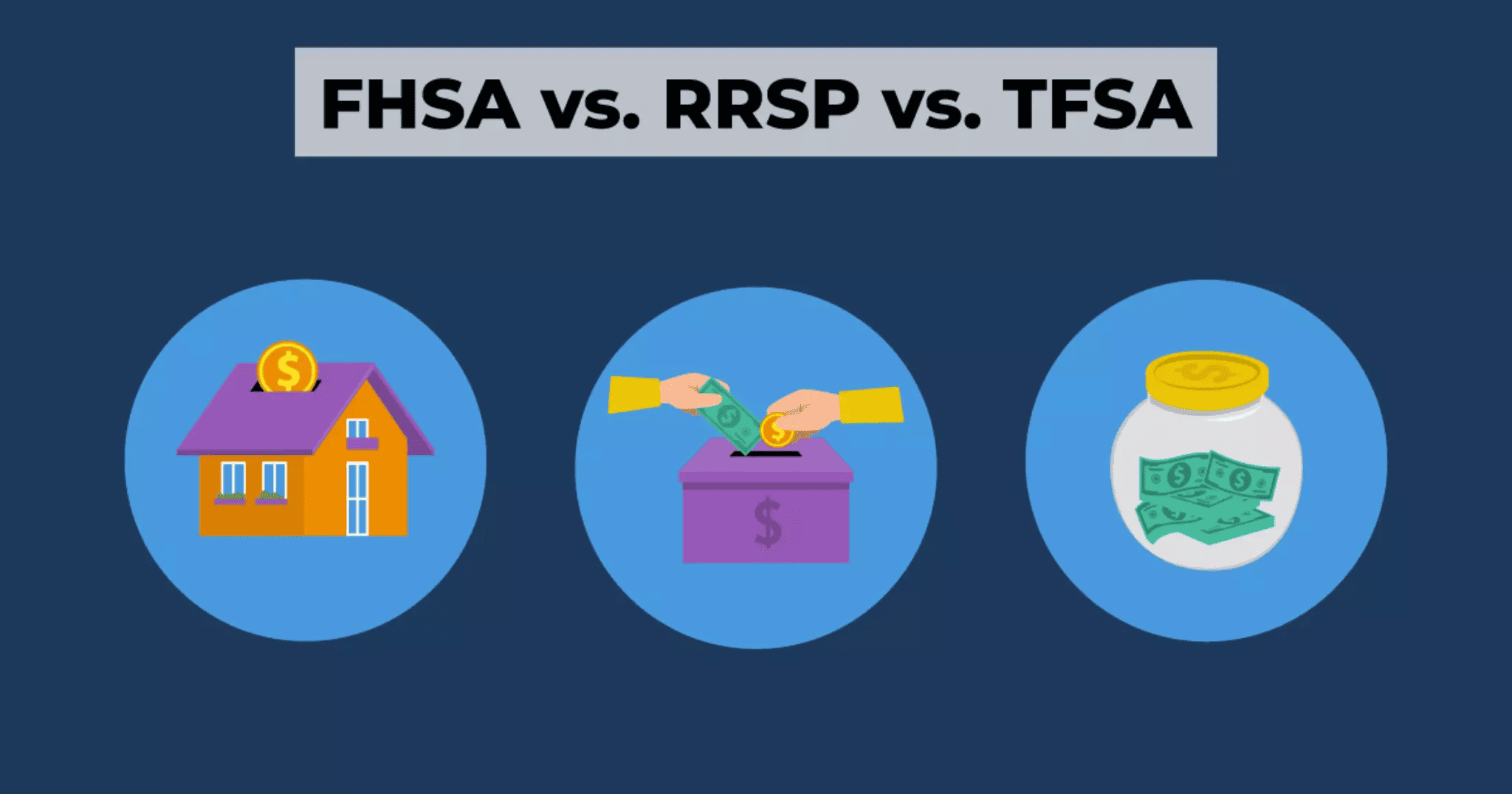
Canada gives first-time buyers three powerful tax-advantaged tools to save for a home. Understanding how they work—and how to stack them—can mean tens of thousands of dollars more in your pocket at closing.
If you’re helping a first-time buyer prepare for homeownership in Canada, the savings conversation doesn’t start with mortgage rates—it starts with accounts. The federal government has created three registered account types that can meaningfully accelerate a down payment: the FHSA, the RRSP Home Buyers’ Plan (HBP), and the TFSA. Each has distinct rules, tax treatment, and strategic value.
The good news? Your clients don’t have to choose just one. Used together, these accounts can be a powerful down payment engine.

Meet the Three Accounts
Before comparing them side by side, it helps to understand what each account is designed to do:
FHSA- First Home Savings Account
Canada’s newest registered account (2023). Contributions are tax-deductible, AND withdrawals for a qualifying home purchase are tax-free. No repayment required.
RRSP HBP- RRSP Home Buyers’ Plan
Borrow up to $60,000 from your RRSP tax-free for a home purchase. Funds must be repaid over 15 years, or the unpaid balance is added to taxable income.
TFSA- Tax-Free Savings Account
Canada’s most flexible registered account. No tax deduction on contributions, but all growth and withdrawals are completely tax-free for any purpose, any time.
The FHSA: The New Powerhouse for First-Time Buyers
The First Home Savings Account combines the two most valuable tax benefits available: a deduction on contributions (like an RRSP) and tax-free growth and withdrawal (like a TFSA)—but only when used for a qualifying first home purchase.
Why the FHSA Wins for Most First-Time Buyers?
A client in a 40% marginal tax bracket who maxes out their FHSA at $8,000/year for 5 years ($40,000 total) gets a ~$16,000 tax refund over that period—while enjoying tax-free growth on investments held inside the account. No repayment required. That refund can be reinvested into a TFSA or used to top up the RRSP.
Clients should open an FHSA as soon as they are eligible, even if they cannot contribute the full amount. Contribution room accumulates from the account-opening date, so opening early preserves future flexibility.
The RRSP Home Buyers’ Plan: A Powerful Supplement
The Home Buyers’ Plan allows first-time buyers to withdraw up to $60,000 from their RRSP—without triggering income tax—to use toward a qualifying home purchase. For couples, that is up to $120,000 combined.
The Repayment Rule — Don’t Let Clients Miss This
Money withdrawn through the HBP must be repaid in equal installments over 15 years, starting the second year after the withdrawal. If a repayment is missed, that amount is added to taxable income for that year. Ensure clients have a repayment plan before recommending the HBP.
The HBP works best for clients who already have substantial RRSP savings. For younger clients with limited balances, the FHSA will typically generate a larger accessible pool.
The TFSA: Flexibility First
The TFSA is the only account in this trio not restricted to first-time buyers. All growth and withdrawals are permanently tax-free for any purpose, at any time.
TFSA for First-Time Buyers: Best Used as a Complement
Once the FHSA is maxed for the year, additional savings can flow into the TFSA. Clients who have never contributed since 2009 may have $95,000 or more in accumulated contribution room—a substantial tax-sheltered savings opportunity.
Real Client Scenarios: Who Should Use What?
- New graduate, age 24 — just starting to save
Open an FHSA immediately. Contribute annually to build the $40,000 lifetime cap and accumulate tax refunds. Supplement with TFSA. RRSP contributions come later when income and deduction value are higher. - Mid-career professional, age 32, RRSP of $80,000
Max the FHSA for deduction and tax-free growth. Plan to use the RRSP HBP for up to $60,000. Build repayment into post-purchase budgeting. TFSA absorbs additional savings above the FHSA annual limit. - Couple, both first-time buyers, income $160,000
Both open individual FHSAs and contribute the maximum. Both eligible for HBP independently — up to $120,000 combined. Stack all three account types across both partners for maximum down payment. - Recent homeowner — no longer a first-time buyer
FHSA and RRSP HBP no longer available. TFSA is the primary savings vehicle. Consider a HELOC on the existing property to fund a move-up purchase. - Newcomer to Canada—arrived within the last 2 years
Check FHSA residency requirements. TFSA is available to Canadian residents with a valid SIN at the age of majority. RRSP requires filing a Canadian tax return with earned income.
The Triple Stack: Using All Three Accounts Together
For clients with the income and savings capacity, combining all three accounts is the optimal strategy:
Step 1: Open and max the FHSA every year. Take the tax deduction. Let investments compound tax-free.
Step 2: Reinvest the FHSA tax refund into the RRSP to build the HBP pool and gain an additional deduction.
Step 3: Direct remaining savings into the TFSA for fully flexible, tax-free growth with no restrictions.
Step 4: At purchase: withdraw FHSA (no repayment) + HBP (repay over 15 yrs) + TFSA for maximum down payment.
Five Things Every First-Time Buyer Needs to Know
1. Open the FHSA Now, Even If You Can’t Max It
Contribution room accumulates from the account-opening date. Opening an FHSA today and contributing $1,000 is better than waiting two years to contribute $8,000 — you’ll have more room available when income increases.
2. The RRSP HBP Requires a Repayment Plan
Unlike the FHSA, RRSP withdrawals under the HBP must be repaid over 15 years. Missing a repayment adds that year’s required amount to taxable income. The FHSA has no such obligation.
3. TFSA Withdrawals Restore Contribution Room
Money withdrawn from a TFSA is added back to your contribution room the following January 1st. Using the TFSA for a down payment does not permanently reduce future savings capacity.
4. FHSA Unused Funds Transfer to RRSP Tax-Free
If a client ends up not purchasing a home, the FHSA balance can be transferred to an RRSP or RRIF without tax consequences before age 71. There is no downside to opening and contributing early.
5. ‘First-Time Buyer’ Has a Specific Legal Definition
Clients must not have owned a qualifying home occupied as a principal residence at any time during the current calendar year or the preceding four calendar years. Confirm eligibility before building a strategy around these accounts.
The Broker’s Role in This Conversation
As a mortgage broker, you’re often the first professional a first-time buyer trusts with their homeownership goals. Ask the right questions early: Do they have an FHSA open? Are they contributing to an RRSP? Do they understand their accumulated TFSA room?
A client who starts saving with the right account mix two or three years before they are ready to buy will arrive at your desk with a larger down payment, a lower required insured mortgage, and better overall qualification prospects. That is better for them — and better for your business.
Help Your Clients Save Smarter
Whether your clients are just starting to save or ready to buy, having the right account strategy in place makes all the difference.
Book a Free Consultation | Download the Comparison Guide | Contact Your Broker Today