
A renewal is not just a rate decision. It’s a chance to reset your mortgage around your life, your goals, and your financial future. Don’t sign anything until you’ve read this.
If your mortgage is up for renewal in 2026, you’re part of the biggest renewal cycle Canada has seen in decades. Roughly 1.15 million Canadian households are renewing this year, many of them facing payment increases of 15 to 20 per cent compared to what they paid during the pandemic-era lows. The pressure is real.
But here’s what too many homeowners miss: your renewal is not just a formality. It’s a financial checkpoint—one of the most important decisions you’ll make this year. Signing the first offer your lender sends could cost you thousands of dollars over the next term.
Before you put pen to paper, here are the most important things every Canadian homeowner must review.
1. Don’t Accept Your Lender’s First Offer
Your bank is legally required to send you a renewal offer before your term expires. What they are not required to do is send you their best rate. In fact, most lenders send their posted rate—which is rarely the most competitive number available in the market.
Banks know that most borrowers sign at renewal without shopping around. That’s precisely why the first offer is almost never the best one.
You have every right to negotiate or take your business elsewhere. Since November 2024, uninsured mortgage holders can switch lenders at renewal without having to re-qualify under the federal stress test (for straight switches to federally regulated lenders). That rule change significantly increased your leverage as a borrower.
What to Do Instead
Get your lender’s renewal offer in writing, then treat it as a starting point.
Contact a mortgage broker at least 90–120 days before your renewal date. Most lenders allow early rate locks in this window — you can secure today’s rate while keeping time to shop.
Compare the offer to current market rates. As of May 2026, the best insured 5-year fixed rates sit around 4.04% and the best variable is near 3.40%.
Remember: switching lenders at renewal no longer requires re qualifying under the stress test for most uninsured borrowers.
2. The Rate Is Not the Whole Story
A low rate is important—but it’s only one part of your mortgage. Signing a renewal solely because it has the lowest number in the headline can be an expensive mistake if the other terms don’t match your life.
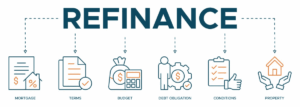
Here are the mortgage features that matter just as much as the rate:
- Prepayment Privileges
- Penalty Calculation
- Portability
- Open vs. Closed
- Amortization Reset
- Rate Type (Fixed/Variable)
The Discount Rate Trap
Some online platforms and direct lenders advertise very low rates that come with restricted features—sometimes called “no-frills” or “collateral charge” mortgages. These can limit your ability to refinance mid-term, increase penalty calculations if you break early, and restrict portability.
Always read the fine print. A rate that’s 0.10% lower but costs you $15,000 in an IRD penalty two years later is not a good deal.
3. Align Your Mortgage with Your Life Goals
Planning to stay long-term?
Lock in a competitive fixed rate with strong prepayment privileges. Focus on reducing amortization.
Thinking of moving in the next few years?
Prioritize portability and a shorter term. A 3-year fixed may cost slightly more per month but saves a large IRD penalty.
Planning renovations?
Renewal may be the right time to refinance and access equity—up to 80% of your home’s value. Ask about blend-and-extend or refinance options.
Carrying high-interest debt?
Rolling credit card or line-of-credit debt into a lower mortgage rate can save significant interest—but requires a plan to avoid re-accumulating the debt.
Finances are tighter than before?
Consider extending the amortization at renewal to reduce monthly payments. This costs more in total interest over time but improves immediate cash flow.
4. Start Early—120 Days Is Your Window
One of the most common renewal mistakes is waiting too long. When your renewal date arrives and you haven’t explored your options, your only choice is to accept whatever your current lender offers.
Most lenders allow you to lock in a rate up to 120 days (4 months) before your renewal date—without paying any penalty. This is your window to act.
Renewal date: Sign your new term with confidence, knowing you reviewed your options.
5. Know Your Prepayment Penalty Before You Commit
If there’s any chance you might break your mortgage before the new term ends—due to a move, a relationship change, a job relocation, or a financial shift understanding your penalty clause is not optional. It is essential.
Variable Rate (closed)—Low Risk with a penalty of 3 months’ interest (~$1,500–$3,500). Predictable and affordable to break.
Fixed Rate (closed)—High Risk with a penalty higher of 3 months’ interest or IRD can reach $10,000–$25,000+. IRD is lender-calculated with no standard formula, making it unpredictable.
Open Mortgage — No Risk ✔ Zero penalty, break any time. Comes with a higher rate than closed terms.
Hybrid/Combo—Moderate Risk Penalty depends on the fixed/variable split. The fixed portion carries IRD risk; the variable portion carries 3 months’ interest.
6. Fixed vs. Variable in 2026: The Real Decision
With the Bank of Canada paused at 2.25% for the fourth consecutive announcement, the fixed vs. variable debate is genuinely more balanced than it has been in years. There is no universally correct answer — it depends entirely on your situation.
Choose Fixed If:
- You need budget certainty each month
- You’re at or near your affordability ceiling
- You plan to stay in the home for the full term
- The rate difference between fixed and variable is small (under 0.5%)
Choose Variable If:
- You have financial flexibility to absorb rate fluctuations
- Variable currently sits meaningfully below fixed
- You believe further BoC cuts are possible
- You can handle payment increases if rates rise
7. A Mortgage Broker Works for You—Not the Bank
One of the most persistent myths in Canadian mortgage lending is that a broker is only useful if you’re switching lenders. That’s not true. A licensed mortgage broker is your independent advisor at renewal, whether you end up staying with your current lender or moving.
Here’s the practical difference: your bank’s renewal specialist represents one lender and one set of products. A mortgage broker has access to dozens of lenders, can compare your offer to the entire market, and can identify options your bank will never volunteer.

Your Pre-Signature Checklist
Before you sign your renewal, make sure you can say yes to every item on this list:I have compared this offer to at least one other lender or broker quote
- I understand the penalty calculation if I break this mortgage early
- I have the renewal offer in writing with the full rate, term, and conditions
- I have confirmed whether this is a standard charge or collateral charge mortgage
- I have considered how my life plans (move, renovate, pay off debt) align with this term
- I have decided between fixed and variable based on my specific situation, not just the number
- I have started this process at least 30 days before my renewal date (90–120 is better)
- I have checked the prepayment privilege limits (lump sums and payment increases)
Renewing Soon? Don’t Sign Anything Yet.
Your lender’s renewal offer is a starting point, not a final answer. Let us review it alongside the market and help you decide what’s actually best for your situation.
Book a Free Renewal Review | Get a Rate Comparison | Talk to a Broker Today